Follow Me

Dynamic Reports

Digital product

About the project

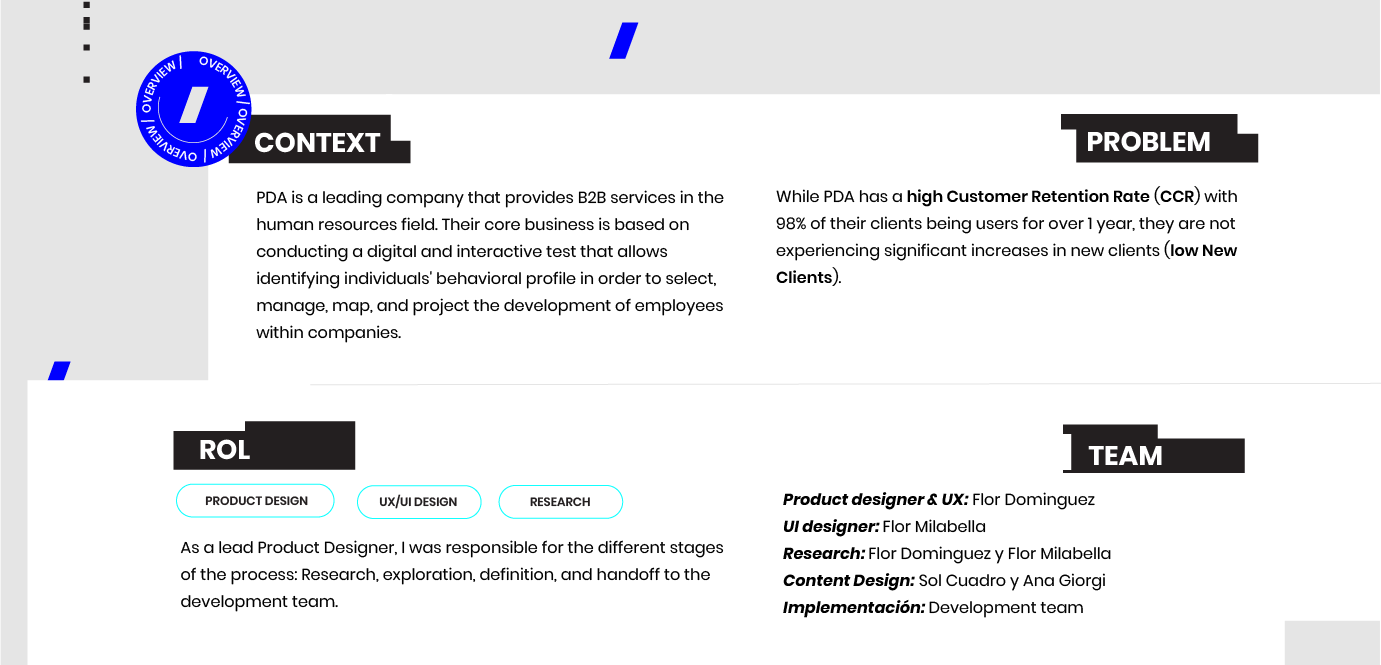
PDA International is a B2B company in the human resources field. Its core product is a digital test that identifies a person's behavioral profile so companies can select, manage and develop their employees. PDA had a 98% customer retention rate, but new clients were not growing.

The output of the test was a 26-page PDF: long, hard to read and focused on a single person, which made it useless for HR consultants and analysts who compare many profiles at once. The hypothesis was that turning that PDF into dynamic, role-specific reports would open a new customer segment.

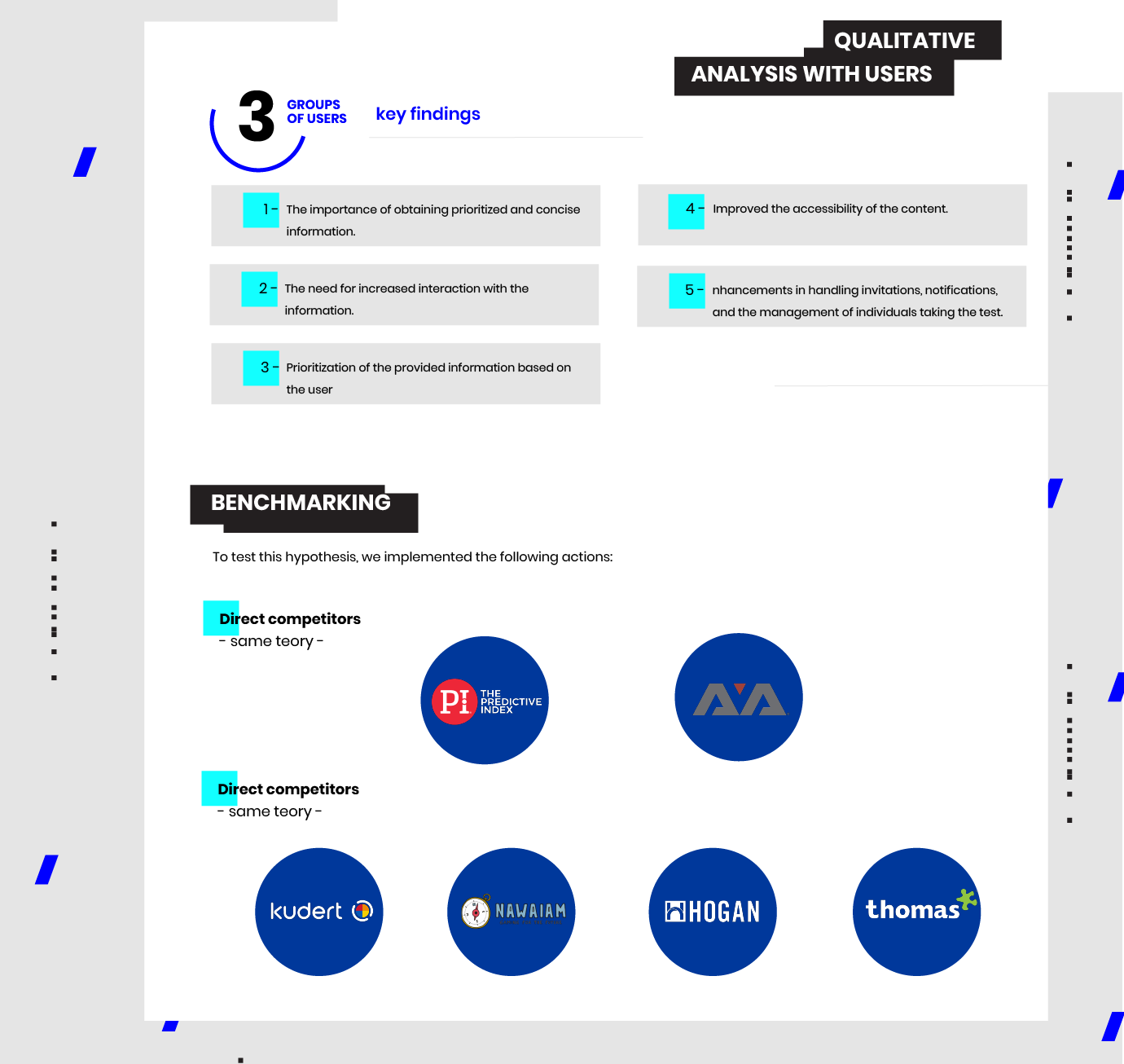
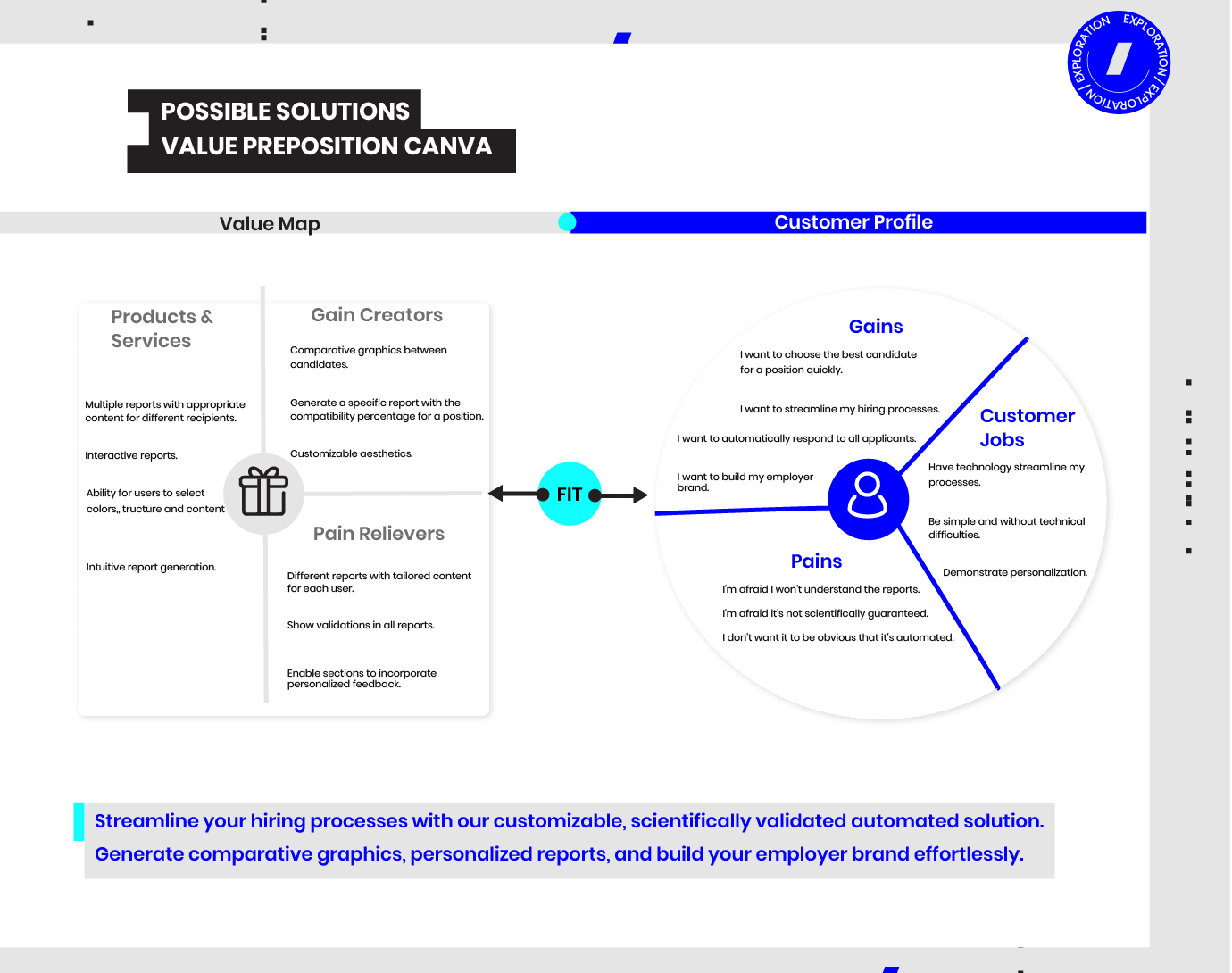
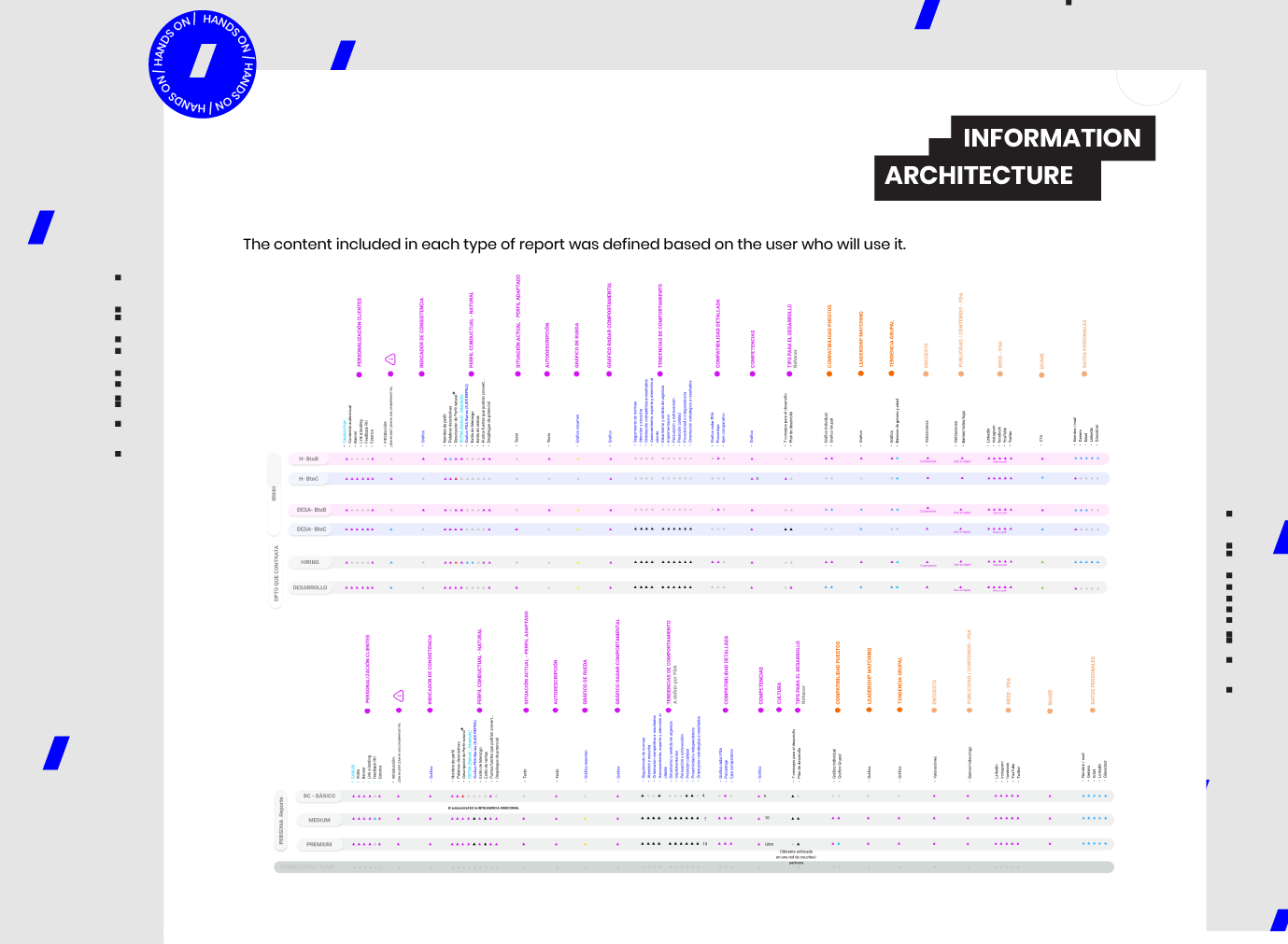
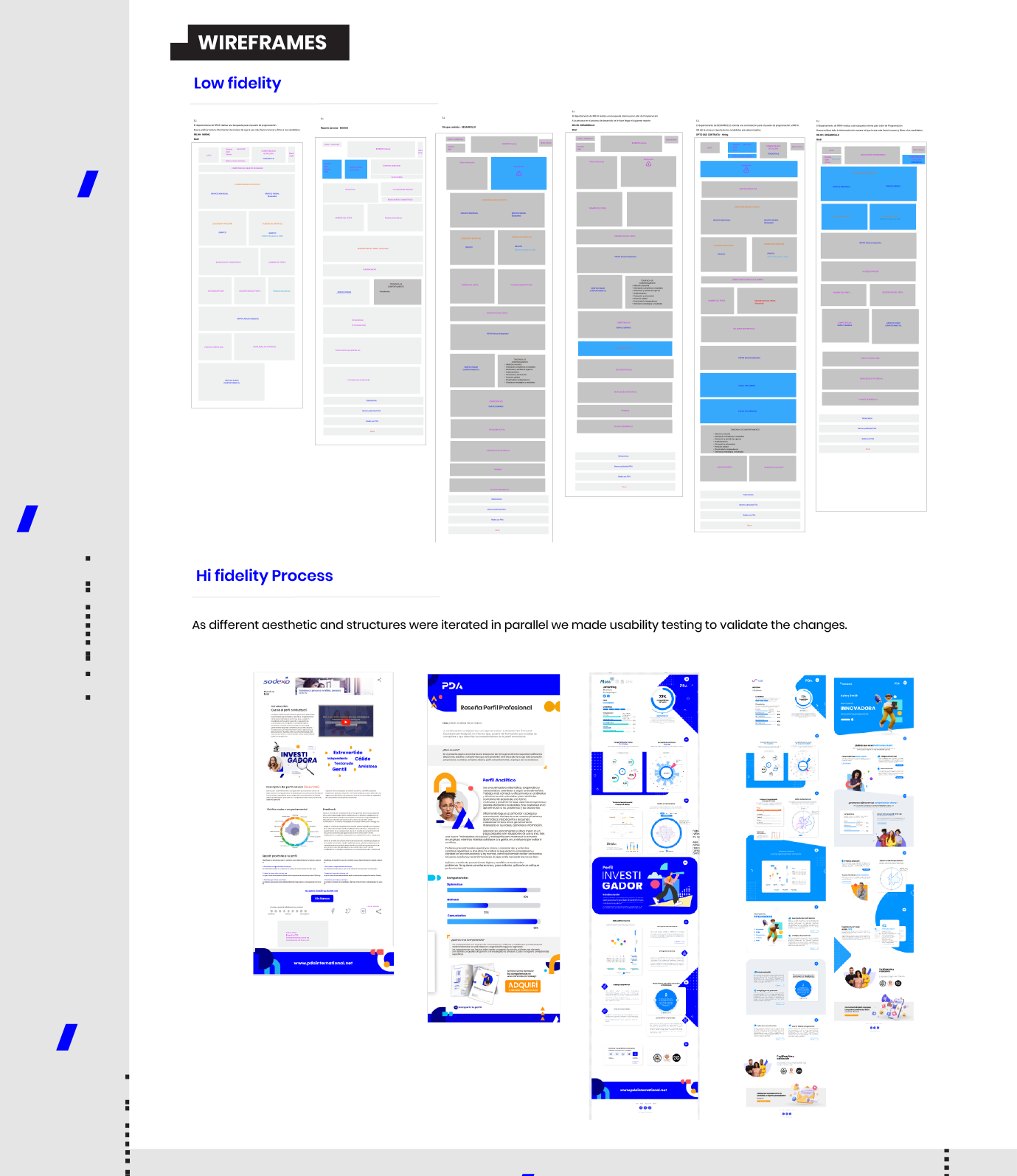
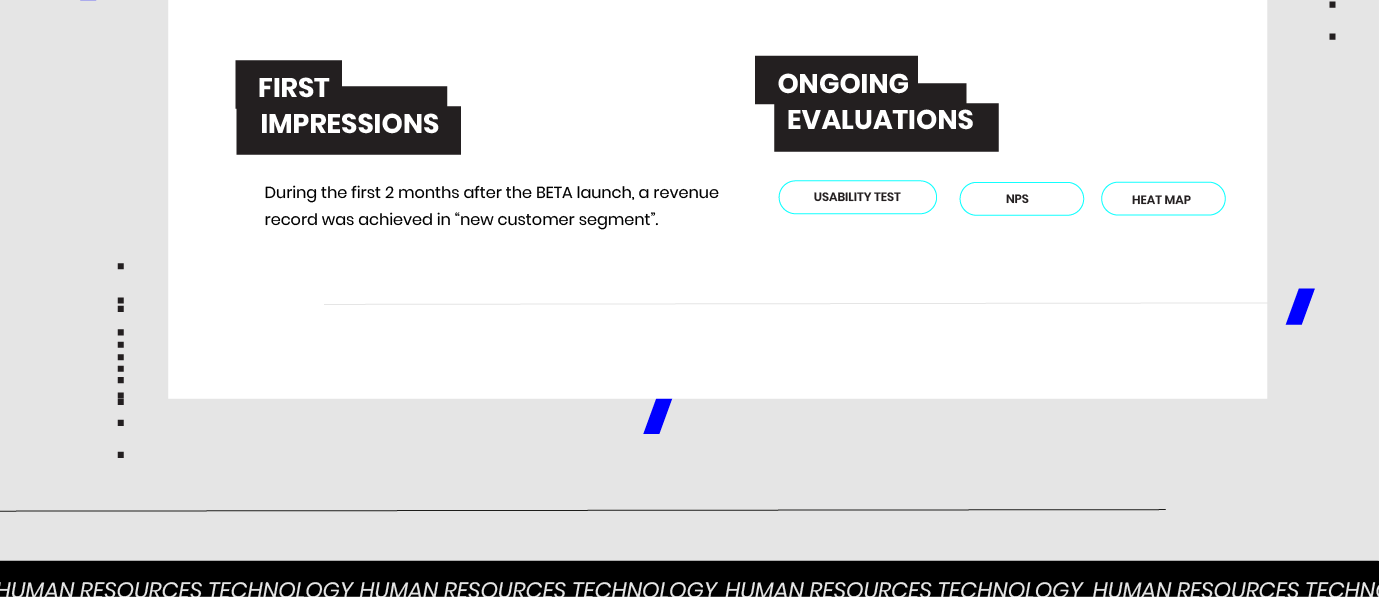
We ran market research, interviews with clients and prospects, a qualitative analysis with three user groups, benchmarking, a value proposition canvas and a new information architecture, then prototyped and tested five report formats before the pilot. During the first two months after the beta launch, PDA achieved a revenue record in the new customer segment. Usability tests, NPS and heat maps continue as ongoing evaluation.
Client: PDA International
Role: Lead Product Designer: research, exploration, definition and handoff
Team: Flor Dominguez (product and UX), Flor Milabella (UI and research), Sol Cuadro and Ana Giorgi (content design), development team
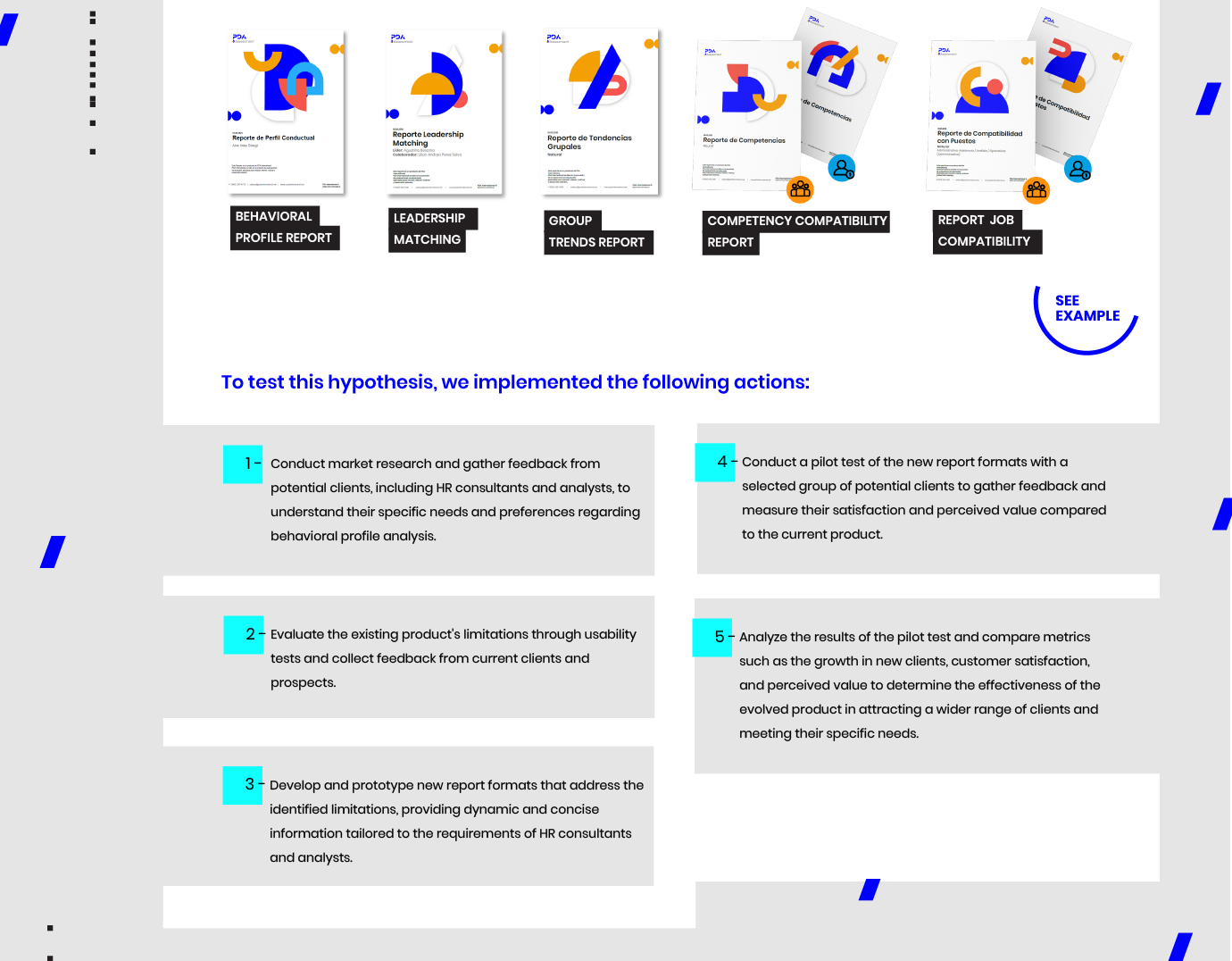
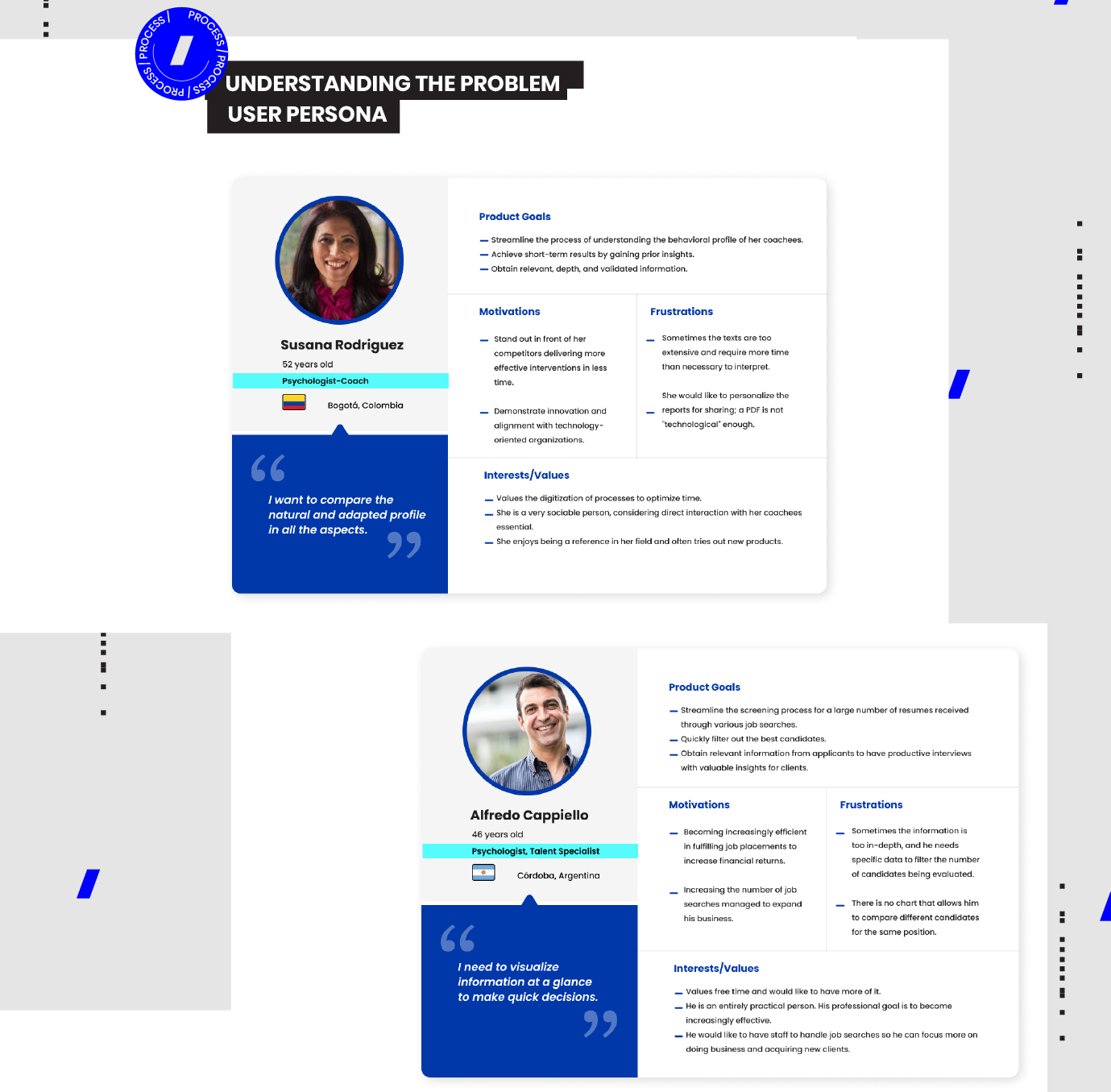
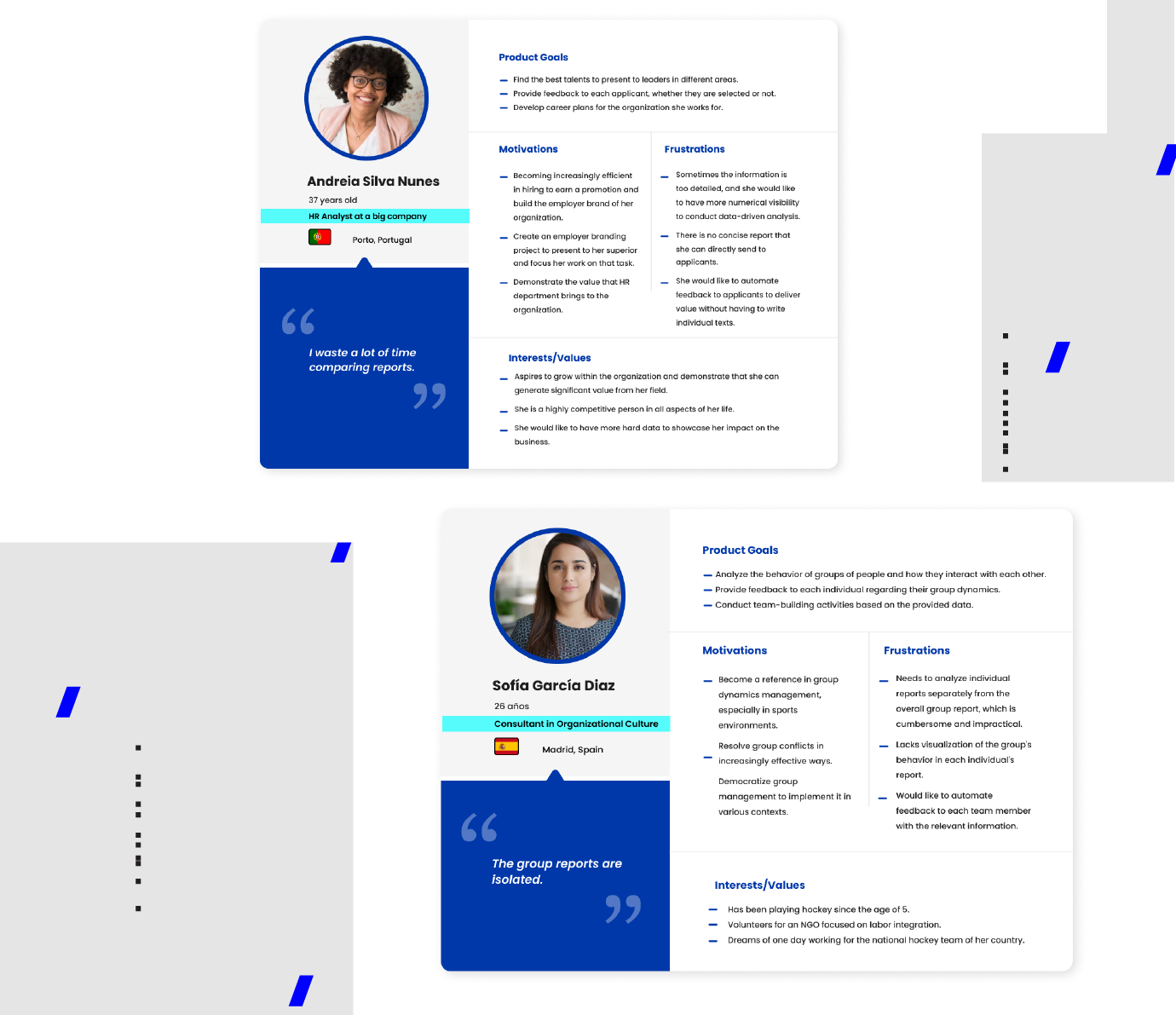
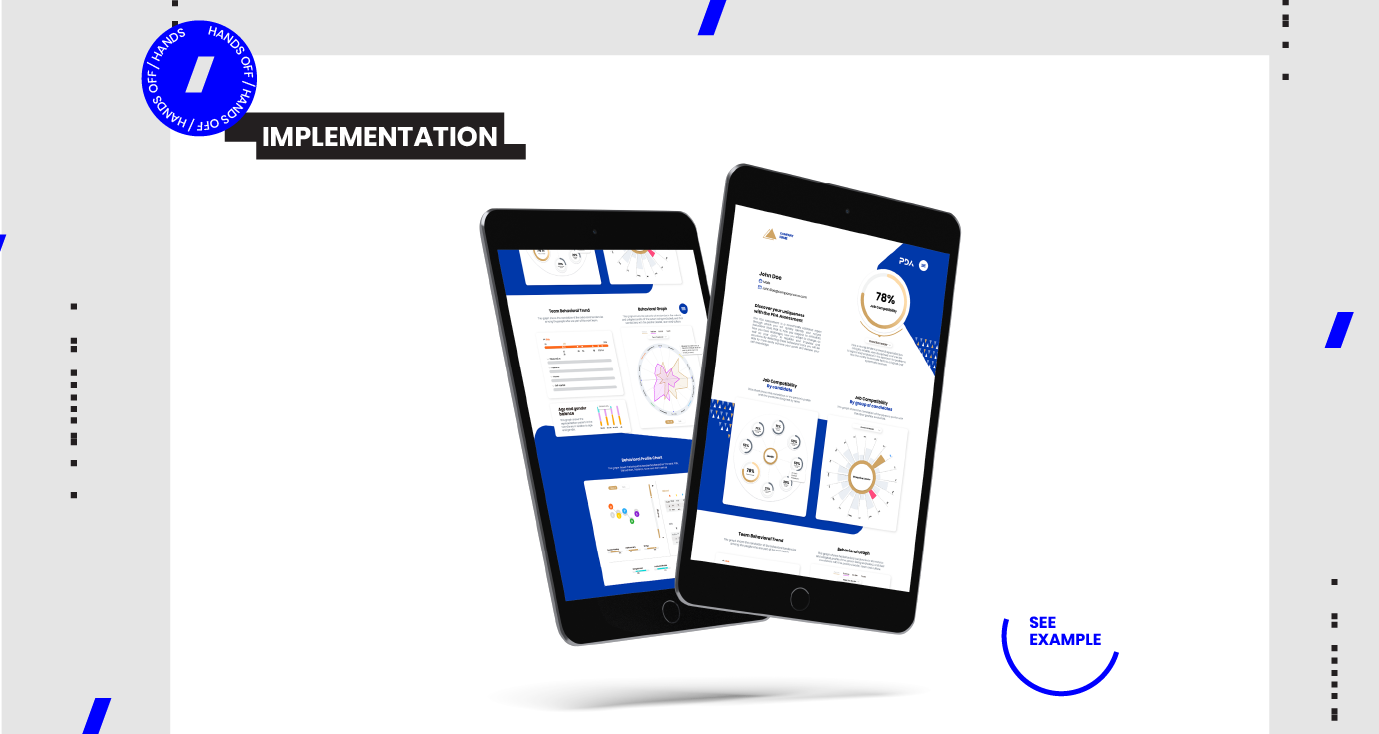
Dynamic behavioral assessment reports: how to transform a PDF into an innovative product that generates differential value Context, problem, role and team: PDA is a B2B HR company with 98% retention but few new clients Hypothesis: the 26-page PDF report is hard to read and lacks dynamism for large-scale analysis The five new report types and the actions taken to test the hypothesis, from market research to a pilot test User personas: an HR analyst and a psychologist, with goals, motivations and frustrations User personas: an HR consultant and an organizational culture consultant Qualitative analysis with three user groups, key findings and benchmarking of direct competitors Value proposition canvas: value map and customer profile for the new reports Information architecture: the content of each report type defined by the user who will use it Low fidelity wireframes and high fidelity screens validated with usability testing Implementation: the dynamic reports running on tablets First impressions: a revenue record in the new customer segment two months after the beta launch; ongoing usability tests, NPS and heat maps